%20(2).png)

WELCOME TO
GEORGIA
ᲡᲐᲥᲐᲠᲗᲕᲔᲚᲝ
Small country. Endless discoveries. 8,000 years of wine, UNESCO polyphony, Europe's wildest mountains — and a table that is always open.
Nestled between the soaring peaks of the Caucasus and the gentle waves of the Black Sea, Georgia is a country of contrasts and discoveries. Ancient stone churches stand beside futuristic architecture, bustling city boulevards lead to quiet vineyards, and every journey is flavored with legendary Georgian hospitality.
Known as the “Cradle of Wine” and home to some of the oldest human settlements in Europe, Georgia offers travelers a unique blend of history, nature, and culture. Whether you’re seeking adventure, relaxation, or cultural immersion, Georgia is a destination that leaves no one indifferent.
Original Name
საქართველო [sak'artvɛlo]
Capital City
Area
69,700 km²
Population
3,760,000
Religion
Orthodox Christianity
Language
Alphabet
Georgian
Georgian alphabet
(აბგდევზთიკლმ...)
Currency
Lari · ₾ · GEL
1 $ ≈ 2.71 ₾
1 € ≈ 3.12 ₾
Time Zone
GMT +4
Visa
Many nationalities (EU, US, Canada, UK, etc.) enjoy visa-free entry for up to one year.

Why Georgia Is Unlike Anywhere Else
There is a country in the Caucasus that most travellers discover by accident — a word of mouth, a photograph, a friend's story — and immediately wonder why they haven't been. Georgia is not a secret any more, but it still belongs to the category of places that feel personal, as though you discovered them yourself. It is the kind of destination that doesn't just give you photographs; it gives you stories.
Positioned at the crossroads of Europe and Asia, Georgia occupies a geography that is almost absurdly generous. Within a journey of a few hours you can move from subtropical coastline to alpine glacier, from the heat of a Kakhetian vineyard to the cold silence of a Svan village surrounded by 5,000-metre peaks. In between: ancient cave monasteries, Ottoman-era bathhouses, art nouveau balconies, Soviet modernist sculpture, and taverns where food arrives uninvited because the host has already decided what you need.
This guide is not a list of places to tick off. It is an attempt to explain what Georgia actually is — its language, its music, its relationship with wine, its mountains, its rituals of hospitality — so that when you arrive, you already speak a little of the country's language. Not Georgian, necessarily. Something harder to learn from a phrasebook: the language of understanding why things here are the way they are.
"Guests are a gift from God." This is not a metaphor in Georgia. It is a social contract that has been observed for centuries, and it shapes almost every interaction a traveller will have."
The statistics are impressive enough on their own: winemaking that predates ancient Rome by several thousand years; one of only fourteen independent writing systems ever developed in human history; polyphonic vocal music complex enough that NASA chose it to represent humanity in outer space; six mountain peaks above 5,000 metres in the north of a country smaller than Ireland. But statistics don't explain the feeling of Georgia. That comes from the table, the glass, the song, and the open door.

GEOGRAPHY & REGIONS
A Country of Impossible Variety
Georgia covers just under 70,000 square kilometres — roughly the size of Ireland, or the state of South Carolina. In that space it packs together a range of environments that most countries could never claim in twice the area.
The Greater Caucasus range forms the entire northern border, separating Georgia from Russia. These are not gentle hills: Shkhara, the highest point in Georgia, reaches 5,193 metres. The Lesser Caucasus runs through the south, lower but still imposing. Between these two ranges lies the Mtkvari (Kura) River valley, where most of the population lives and where Tbilisi has sat for fifteen centuries.
To the west, the Colchic lowlands descend toward the Black Sea, creating a humid subtropical climate that supports tea plantations, palms and citrus. To the east, the Alazani River valley in Kakheti is one of the great wine-producing landscapes of the world. In the south, the Javakheti plateau is a high volcanic land of crater lakes and ancient monasteries. In the northeast, the Alazani watershed rises into the remote mountains of Tusheti, one of the most isolated inhabited regions in Europe.
The Main Travel Sights

Batumi

Kakheti

Mtskheta

Svaneti

Javakheti

Borjomi

Tbilisi
Vardzia

Tusheti

Uplistsikhe

Kutaisi

Martvili Canyon

Kazbegi

Gelati
The Map of Travel Sights
Georgia's climate zones range from humid subtropical on the Black Sea coast (where palm trees and eucalyptus grow) to alpine tundra in the high Caucasus — all within a country you can drive across in about six hours. Travellers in July can swim in the Black Sea and, on the same day, drive to see snow-covered peaks.
INTERESTING FACT

HISTORY & ARCHITECTURE
Georgia Through the Ages
Most countries measure their history in centuries. Georgia measures it in geological epochs.
On the hills above Tbilisi, hominids walked the earth 1.8 million years ago — when Europe was still uninhabited. In the Kvemo Kartli valley, people cultivated wheat and pressed the world's first wine 8,000 years ago, when the Egyptians had not yet invented writing. In Colchis, goldsmiths created jewellery so fine it gave the Greeks their legend of the Golden Fleece.
This is not the history of an isolated mountain people. Georgia sat at the crossroads of the ancient world — between Persia and Greece, between the Scythian steppes and the Roman frontier, astride the trade routes that would later be called the Silk Road. Empires rose around it and broke against it. Persians, Romans, Byzantines, Arabs, Mongols, Timurids, Ottomans and Russians all reached for this land. None of them erased it.
What survived every invasion was not a border or a dynasty, but something harder to conquer: a language with its own unique alphabet, a church that answered to no foreign power, a tradition of wine, song and hospitality woven so deeply into daily life that no occupier could remove it. The story below is the spine of that survival — the people, the kingdoms and the turning points that made Georgia what it is
Scroll or tap any moment on the timeline to open it.
Centuries in Stone. Architecture of Georgia
Georgian architecture is not one tradition but several, layered across two thousand years and shaped by an extreme landscape. Cathedrals rise on the plains; defensive towers cling to glaciers; wooden mosques stand without a single nail in the Adjaran highlands; and bathhouse domes steam beneath the Old Town of Tbilisi. To understand it, look not at a list of monuments, but at the kinds of building a mountain people learned to make.

LANGUAGE & ALPHABET
The Unique Language and Alphabeth
Georgian belongs to the Kartvelian language family — a group with no relatives outside the Caucasus. It is unrelated to Indo-European languages (English, German, Russian, Persian), Semitic languages (Arabic, Hebrew) or Turkic languages. It is not related to Armenian or Azerbaijani. It is, in a real sense, its own world.
The language is spoken by approximately 4 million people. It is the official language of Georgia and one of the oldest literary languages in the world, with texts dating to the 2nd century BC. The script it uses — Mkhedruli — is one of only fourteen independent writing systems ever developed by humanity. It was not borrowed or adapted from another alphabet; it was created from scratch.
The Mkhedruli Script
The 33 letters of the Georgian alphabet are rounded, flowing forms with no capital letters — the script is unicase, meaning every letter has only one form. To the eye of someone encountering it for the first time, it looks more like a piece of calligraphy than a writing system. Georgian children often say their letters resemble animals or plants; the comparisons are not unreasonable.
Linguists believe the first Georgian alphabet (called Asomtavruli, still used in church inscriptions) may date to the early 2nd century BC, making Georgian one of the oldest continuously used scripts in the world. The modern Mkhedruli letters were standardised around the 10th century.
Georgian has no grammatical gender. There is no "he" or "she" — only the neutral pronoun "ის" (is), used for all people. The language also has no articles (no "the" or "a"). What it does have is a verb system of extraordinary complexity: a single verb root can produce over a thousand different conjugated forms, encoding tense, aspect, mood, person, and the transitivity of the action — all simultaneously.
INTERESTING FACT

Georgian Medieval Astronomical Manuscript written in the 12th century
Key Words and Phrases
Learning even a few words of Georgian will consistently produce reactions of delight and warmth. Georgians are used to foreigners assuming their language is incomprehensible and not trying. The ones who try stand out in the best way.
The name "Georgia" has fascinated historians for centuries. While locals call their country საქართველო (Sakartvelo) — meaning "the land of the Kartvelians" — the English name Georgia is widely believed to be connected with the ancient Greek word γεωργός (geōrgos), meaning "farmer" or "one who works the land."
This interpretation fits remarkably well. For the ancient world, the region was already renowned for its fertile valleys, advanced agriculture, early wheat cultivation, and, above all, its extraordinary winemaking tradition dating back more than 8,000 years. The very roots of the word combine γῆ (gē, "earth") and ἔργον (ergon, "work") — literally, "to work the land."
Today, however, Georgians themselves simply call their homeland Sakartvelo. Using this name in conversation is often met with a smile and genuine appreciation, as it shows an interest in the country's language, history, and identity beyond the guidebooks.
INTERESTING FACT

MUSIC
Georgian Music: Three Voices, One Soul
In 2001, UNESCO added Georgian traditional polyphonic singing to its first-ever list of Intangible Cultural Heritage. The citation acknowledged something that musicologists had known for decades: Georgian choral music is one of the oldest, most complex and most unusual vocal traditions on earth.
Polyphony — music in which several independent vocal lines occur simultaneously — exists in many cultures. What makes Georgian polyphony distinctive is both its age and its structure. Georgian vocal music does not build harmonies around a single melody; it weaves three or more autonomous lines that create complex dissonances before resolving, often unexpectedly, into moments of tremendous emotional force. There is no conductor. There is rarely a written score. The singers learn by ear, from childhood, from family and community.
"Georgian singing does not sound like harmony in the European sense. It sounds like an argument between three people who all know they are right — and who are, in the end, all right."
The tradition differs dramatically from region to region. Eastern Georgian polyphony — particularly from Kartli and Kakheti — tends toward the table song, the застольная of the Caucasus, sung over wine at feasts. Western Georgian traditions — from Guria, Samegrelo, Racha and Svaneti — include sacred music, laments, work songs and ritual pieces, some featuring the extraordinary "krimanchuli" voice: a yodel-like falsetto that spirals impossibly high above the other singers.
Songs Worth Knowing

DANCE
The Art of Moving Without Touching
Georgian traditional dance is, by any technical measure, among the most demanding folk dance traditions in the world. Male dancers — particularly in the Georgian national style, Kartuli — perform complex sequences of leaps, spins and floor-level movements entirely on the tips of their toes, wearing specially designed boots that allow this. The athleticism required is equivalent to that of a trained ballet dancer, but the style is radically different: faster, more percussive, and charged with a particular kind of masculine energy that references warriors and horsemen.
What makes Georgian dance visually extraordinary is the contrast between the two genders. While male dancers explode across the stage with spins and jumps, female dancers glide with almost supernatural stillness from the waist up. Their arms are held soft but controlled; their feet move rapidly but invisibly beneath long skirts. The combination of kinetic male energy and gliding female stillness produces something that is simultaneously athletic and aesthetic.
Regional Styles

WINE
8,000 Years in a Clay Jar
Wine is older in Georgia than almost anything else in the world. Archaeological excavations in the Caucasus foothills have produced grape seeds, residue, and winemaking implements dating to at least 6,000 BC — roughly 8,000 years ago. This predates the earliest known winemaking in the Middle East or Europe by centuries, and makes Georgia the strongest candidate for what archaeologists and wine historians call the birthplace of wine.
This is not merely a historical curiosity. Georgians have not simply maintained a tradition; they have lived inside it. Wine here is not an industry or a leisure product. It is woven into the Orthodox liturgy, into the language of hospitality, into the agricultural calendar, into the social structure of the village and the family. The word for "vine" in Georgian — "vazi" — appears in medieval poetry, in church frescoes, in the national coat of arms. To understand Georgian wine is to understand something fundamental about the culture itself.
Some linguists also argue that the very word “wine” may ultimately trace its roots to the South Caucasus. One influential hypothesis links the Latin vinum and related words across many Indo-European languages to an ancient Proto-Kartvelian root, reconstructed as *ɣʷiv- or *ɣʷey-, associated with fermentation, foaming, or the process of becoming active through brewing. In modern Georgian, related forms survive in verbs such as „ღვივდება“ (ghvivdeba), conveying the idea of awakening, coming to life, or becoming active. While the exact etymology remains debated among scholars, the linguistic parallels reinforce the deep historical association between Georgia and the origins of viticulture.
The Qvevri Method
The traditional Georgian method of winemaking uses a vessel unlike anything in French, Italian or Spanish tradition: the qvevri (ქვევრი). This is a large clay amphora, shaped like an egg narrowing to a point at the base, sealed with beeswax on the interior and buried underground up to its neck. Winemaking in a qvevri is not analogous to barrel fermentation: the wine — both juice and grape solids — is placed in the vessel, sealed, and left underground, where the earth maintains a constant temperature that allows a slow, natural fermentation and ageing process.
The result, for white grapes left in extended skin contact with their solids, is what wine drinkers now call "amber wine" or "orange wine": a white wine with the colour and tannin structure of a light red, with a dry, complex, sometimes oxidative character that resembles nothing else in the wine world. The qvevri method was inscribed on UNESCO's Intangible Cultural Heritage list in 2013.
Georgia's Wine Regions
The Supra and the Tamada
Wine in Georgia is inseparable from its social context. The central ritual is the supra — the feast — a formal meal with an elaborate structure that is one of the great underappreciated cultural institutions of the world.
A supra is presided over by a tamada (თამადა), a toastmaster appointed before the meal begins. The tamada is not simply someone who raises glasses; they are a kind of master of ceremony, philosopher and entertainer, responsible for setting the emotional tone of the evening. They propose toasts in a traditional order: to peace, to Georgia, to the host family, to the guests, to love, to the deceased, to children, to God, and eventually to whatever matters most to those present.
Each toast is a small speech, and a good tamada is genuinely eloquent — funny, poetic and capable of saying something true. Guests drink after each toast; refusing outright is considered discourteous, though sipping rather than emptying the glass is acceptable. Between toasts, food arrives continuously. Songs may break out spontaneously. The evening rarely ends before midnight.

GEORGIAN CUISINE
The Table That Never Ends
Georgian cuisine is one of the world's great undiscovered gastronomic traditions. It arrived at its character through a combination of technique and the extraordinary natural resources of a country that produces walnuts, pomegranates, citrus, herbs, spices, game, river fish, mountain cheeses and some of the best beef and lamb in the Caucasus. The result is food that is generous, complex and deeply satisfying — the kind of cooking that makes you understand immediately why Georgians treat the table as sacred.
What makes Georgian food immediately distinctive is its use of ingredients that don't appear together anywhere else: walnut paste with fenugreek and garlic applied to cold vegetables; pomegranate seeds scattered over grilled meat; different spice blends called suneli (სუნელი) that contain between eight and twelve dried herbs and spices — including blue fenugreek, marigold petals, coriander and dill — and appears in almost everything.

GEORGIAN MOUNTAINS
The Caucasus: Europe's Last Wild Frontier
The Greater Caucasus is one of the youngest mountain ranges on earth, geologically speaking — still actively rising, still producing earthquakes, still dramatically unweathered by the standards of the Alps or Pyrenees. The peaks here are genuinely serious: six summits in Georgia exceed 5,000 metres. The landscapes — granite walls, hanging glaciers, alpine meadows, deep river gorges — are of a scale and drama that few European mountain ranges can approach.
What makes the Georgian Caucasus distinct from the Alps or the Dolomites is not just the altitude but the human landscape embedded within it. Remote villages in Svaneti have been continuously inhabited for over a thousand years, their medieval stone towers still standing. The communities of Tusheti were cut off from the rest of Georgia every winter for centuries; the songs, dances, architecture and customs they preserved are found nowhere else. The mountains here did not just provide scenery. They created civilisations.
The Main Peaks of Georgia

KAZBEGI
The most accessible mountain destination from Tbilisi — three hours north along the Georgian Military Highway, a road that follows the Terek River gorge through increasingly dramatic scenery. Stepantsminda (formerly Kazbegi) is the main village, at 1,740 metres, overlooked by the Gergeti Trinity Church on a 2,170-metre hilltop with Kazbek behind it.
The hike to Gergeti is approximately two hours on foot from the village and is one of the most satisfying easy mountain walks in the Caucasus: the trail is clear, the views open progressively, and the arrival at the church — built in the 14th century, still active — is genuinely moving. From the church, on a clear day, the face of Kazbek fills the skyline completely.
For more serious hiking, the area around Kazbegi offers routes to the Gergeti glacier, the Truso valley (a high-altitude volcanic landscape with mineral springs and ruined medieval fortresses), and multiday treks... Read More

SVANETI
Svaneti is where Georgia becomes something you struggle to describe adequately. It is a high mountain region in the northwest where medieval stone defensive towers — called Svan towers — rise from almost every village, some of them a thousand years old. The Svan people built them for refuge during the blood feuds and invasions that defined medieval Caucasian life; a village of thirty families might have thirty towers.
The main town, Mestia, is at 1,500 metres and has a small airport with flights from Tbilisi (40 minutes) and a growing hospitality infrastructure. From Mestia, day hikes reach Chalaadi glacier, the villages of Latali and Lenjeri, and the Koruldi Lakes at 2,800 metres with panoramic views of Ushba and Tetnuldi.
Ushguli, four villages clustered together at 2,200 metres above Mestia along a rough road, is one of the highest permanently inhabited settlements in Europe. Its towers and the backdrop of Shkhara's glacier make it one of the most photographed landscapes in Georgia. The village has been continuously inhabited for over a thousand years.

TUSHETI
If Svaneti is Georgia's most spectacular mountain destination, Tusheti is its most extreme. A high-altitude region in the northeast, Tusheti is accessible only via the Abano Pass (2,926 metres) along a road that is consistently listed among the most dangerous in the world: single-lane, unpaved, with sheer drops, no barriers and sections where passing a vehicle coming the other way requires one vehicle to back up to a wider point. The pass is open approximately June to October, subject to weather.
Inside Tusheti, the landscape is extraordinary: high mountain meadows, medieval stone towers, villages where electricity arrived only in the 21st century, ancient traditions of horsemanship and textile-making that have survived because geography made them difficult to replace. The region is increasingly visited by adventurous travellers and trekkers, but the infrastructure remains limited — guesthouses are family-run, mobile signal is sparse, and self-sufficiency is rewarded.

Four Seasons, Four Different Georgias
SIGNATURE TOURS


from €1290
Discover Georgia & Armenia in 12 days this season — explore ancient monasteries, stunning Caucasus landscapes, vibrant cities, and rich food and wine traditions.
Duration:
12 days

from €987
Georgia’s wild east, with its soaring mountains, rich traditions, and welcoming people — a unique blend of ancient heritage and untamed natural beauty.
Duration:
8 days

from €1469
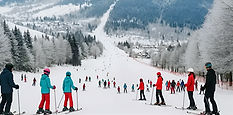
Embark on an unforgettable 7-day ski touring adventure in Georgia’s majestic Svaneti region, combining pristine powder slopes, and breathtaking Caucasus views.
Duration:
7 days

from €838
Embark on an unforgettable 8-day adventure in Georgia, combining rich culture, stunning landscapes, historic treasures, and breathtaking Caucasus views
Duration:
8 days